
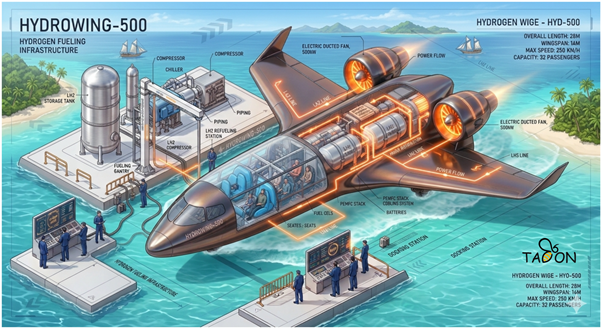
Nusantara Hydrowing is building the world’s first clean-hydrogen, high-speed maritime transit network for Indonesia. By deploying Wing-in-Ground-Effect (WIGE) vessels operating in the “ground effect” cushion just above the sea, we bypass both the extreme energy costs of traditional aviation and the slow, carbon-heavy infrastructure of conventional marine ferries.
Indonesia is the world’s ultimate sandbox for WIGE technology. We provide a 2.3x efficiency leap over aircraft, use existing harbor docks, and produce zero emissions, transforming inter-island logistics and transit into a modern, frictionless network.
Indonesia spans ~17,500 islands stretching over 5,000 kilometers. The country suffers from a deep regional connectivity and logistics crisis:
The Infrastructure Trap: Building airports on thousands of small islands is capital-impossible. Conversely, building deep-water ports for massive ferries is slow, disruptive to marine ecosystems, and leaves rural communities isolated.
The Logistics Penalty: Logistics represent an staggering 20% to 24% of total production costs in Indonesia. Small islands in regions like Maluku, East Nusa Tenggara (NTT), and Raja Ampat suffer heavy price disparities due to inefficient backhaul and high sea-freight costs.
The Carbon Conundrum: Aviation is under immense pressure to decarbonize, but heavy batteries severely limit the range of electric flight. Meanwhile, the maritime sector remains anchored to volatile, heavy marine diesel.
Nusantara Hydrowing introduces a zero-emission, hydrogen-fueled WIGE vessel engineered specifically for archipelagic waters.
Aerodynamic Leverage: Flying 3–5 meters above the water creates an aerodynamic air cushion. The resulting reduction in drag allows our vessels to travel up to twice the distance of equivalent aircraft using the same energy footprint.
Hydrogen Powerplant: By utilizing liquid hydrogen (LH₂) fuel cells driving electric propulsion, we sidestep the weight penalties of commercial EV batteries. Crucially, the only byproduct is pure water.
Maritime Regulations: Because WIGE craft are governed globally by the International Maritime Organization (IMO) rather than aviation bodies, certification timelines are drastically shortened, and pilots are certified as mariners rather than commercial air captains.
The Market Opportunity: Why Indonesia, Why Now?
Unparalleled Topography: Indonesia features 99,083 kilometers of coastline (second largest globally). Most inter-island channels sit perfectly within the 150 to 300-nautical-mile sweet spot for WIGE vehicles.
Government Alignment: The Indonesian sovereign wealth fund and state utilities are actively seeking green energy transitions. In parallel, initiatives like the Sea Toll Program (Tol Laut) have already paved the way for route expansion across 109 regional ports. Nusantara Hydrowing steps in to offer the high-speed tier of this maritime infrastructure.
Activate to view larger image,
Leave a Reply