
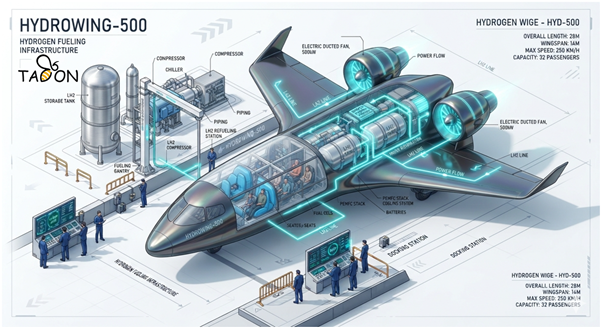
Indonesia is the world’s largest archipelagic state, spanning over 17,500 islands. Its economic growth is fundamentally bottlenecked by fragmentation. Current maritime transport is painfully slow, while aviation is cost-prohibitive and limited by rigid infrastructure. Nusantara Hydrowing introduces a disruptive category of maritime aerospace: Hydrogen-Fueled Wing-in-Ground-Effect (WIGE) vessels.
Indonesia’s geography creates a massive transport deficit:
The Maritime Bottleneck: Standard passenger ships and ferries are slow, often requiring 12 to 36 hours to connect major regional hubs. They are highly vulnerable to weather disruptions and offer a poor passenger experience.
The Aviation Barrier: Aircraft are fast but require billions of dollars in airport infrastructure. Out of 17,500 islands, only a fraction have runways.
A WIGE vessel flies within the aerodynamic “ground effect” zone, usually less than one wingspan’s height above the water. By trapping a cushion of high-pressure air beneath the wings, the vehicle experiences a massive increase in lift and a drastic reduction in aerodynamic drag.
Combined with a cutting-edge hydrogen fuel cell powertrain, our WIGE vessels achieve true zero-emission flight with unmatched energy efficiency, completely bypassing the need for asphalt runways.
Our WIGE vessels fundamentally redefine maritime travel by upgrading transit from a grueling voyage to a rapid commute.
Unmatched Speed: While conventional ferries crawl at 15–20 knots (28–37 km/h), our WIGE vessels cruise comfortably at 120–150 knots (220–280 km/h). A 12-hour sea journey is reduced to under 90 minutes.
Superior Passenger Comfort: By flying above the waves rather than cutting through them, WIGE vessels eliminate sea-sickness entirely, providing a smooth, aircraft-like cabin experience even in rough swells.
High Frequency Operations: Rapid transit times allow a single WIGE unit to complete multiple round trips per day, drastically increasing asset utilization compared to traditional ships.
We offer the speed of aviation without its financial and physical constraints.
Zero Airport Infrastructure Required: Our WIGE vessels take off and land vertically or via short hydrodynamic glides directly on the water. They utilize existing maritime docks, jetties, or simple floating pontoons.
Unprecedented Aerodynamic Efficiency: Because the ground effect reduces drag by up to 50% compared to a high-altitude aircraft, our vessels require significantly less energy per passenger-kilometer.
The Hydrogen Economic Advantage: Traditional aircraft are bottlenecked by the heavy weight of batteries or the high cost of sustainable aviation fuel (SAF).
Regulatory Speed-to-Market: WIGE vessels are legally classified as maritime ships (IMO Class B or C) rather than commercial aircraft. This significantly streamlines the certification, pilot licensing, and operational approval processes.
Leave a Reply