
Biogenic sodium silicate is the ultimate key to unlocking the next generation of eco-friendly, intelligent soft robots. By moving away from carbon-intensive mined minerals and petroleum-based plastics, this biogenic material transforms agricultural waste into a high-performance cornerstone for sustainable automation.
Here is how incorporating biogenic sodium silicate into your robotic architectures will give your product lines a distinct edge in performance, intelligence, and environmental compliance:
Core Value Propositions for Your Engineering & Product Teams
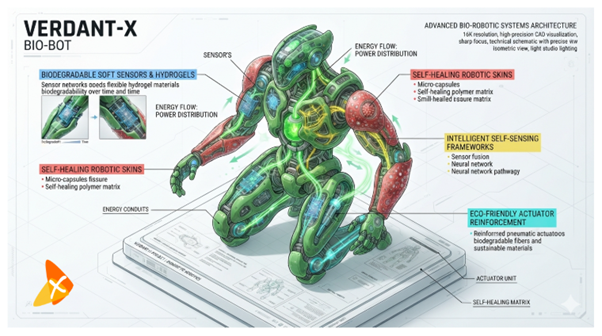
Dual-Action Electronic Skins: Eliminate the weight and complexity of traditional wiring. Biogenic sodium silicate forms the foundation of biocompatible, ionically conductive hydrogels. This allows your soft robots to natively measure stretch, strain, and deformation within their own structural skin—no toxic carbon inks or heavy metals required.
Autonomous Self-Healing Capabilities: Maximize operational uptime and product lifespan. When paired with bio-binders, our sodium silicate enables robotic components to autonomously repair surface punctures and micro-tears at room temperature. Your robots can recover in the field without manual maintenance or component replacement.
Structural Self-Sensing Frameworks: Turn structural skeletons into smart data collectors. Utilized as a green alkali activator for bio-geopolymers, this material creates rigid components with inherent electrical conductivity. The robot’s framework itself acts as a massive load sensor, identifying stress concentrations and structural fatigue in real time without external sensors.
Enhanced Thrust-to-Weight Performance: Do not compromise on power. The high-purity nano-silica derived from biogenic sodium silicate serves as a premium, eco-friendly reinforcing filler for soft actuators and liquid crystal elastomers (LCEs). It boosts force output and actuation performance while keeping your carbon footprint minimal.
Leave a Reply